Local SEO in 2026: The Complete Guide to Getting Found by Customers Near You
Introduction
Somewhere near you, right now, someone is searching for a business exactly like yours. They're not scrolling through a phone book. They're not asking three friends for a recommendation before they decide. They're typing a few words into Google — "plumber near me," "best bakery in [city]," "digital marketing agency near me" — and within seconds, they'll have a shortlist of businesses to choose from.
The question isn't whether that search is happening. It's whether your business shows up when it does.
That's what local SEO is about. Not rankings for the sake of rankings, not vanity metrics, but the simple, practical work of making sure your business is visible at the exact moment a nearby customer is ready to act. In this guide, we'll walk through what local SEO actually means, why it matters more in 2026 than it ever has before, and the specific, practical steps that move a business from invisible to found.
If you'd rather have a team handle this for you, our Local SEO services are built specifically for small and growing businesses that want to show up where their customers are already looking. But whether you hire us or do it yourself, understanding how local SEO actually works is the first step.
What Is Local SEO, Exactly?
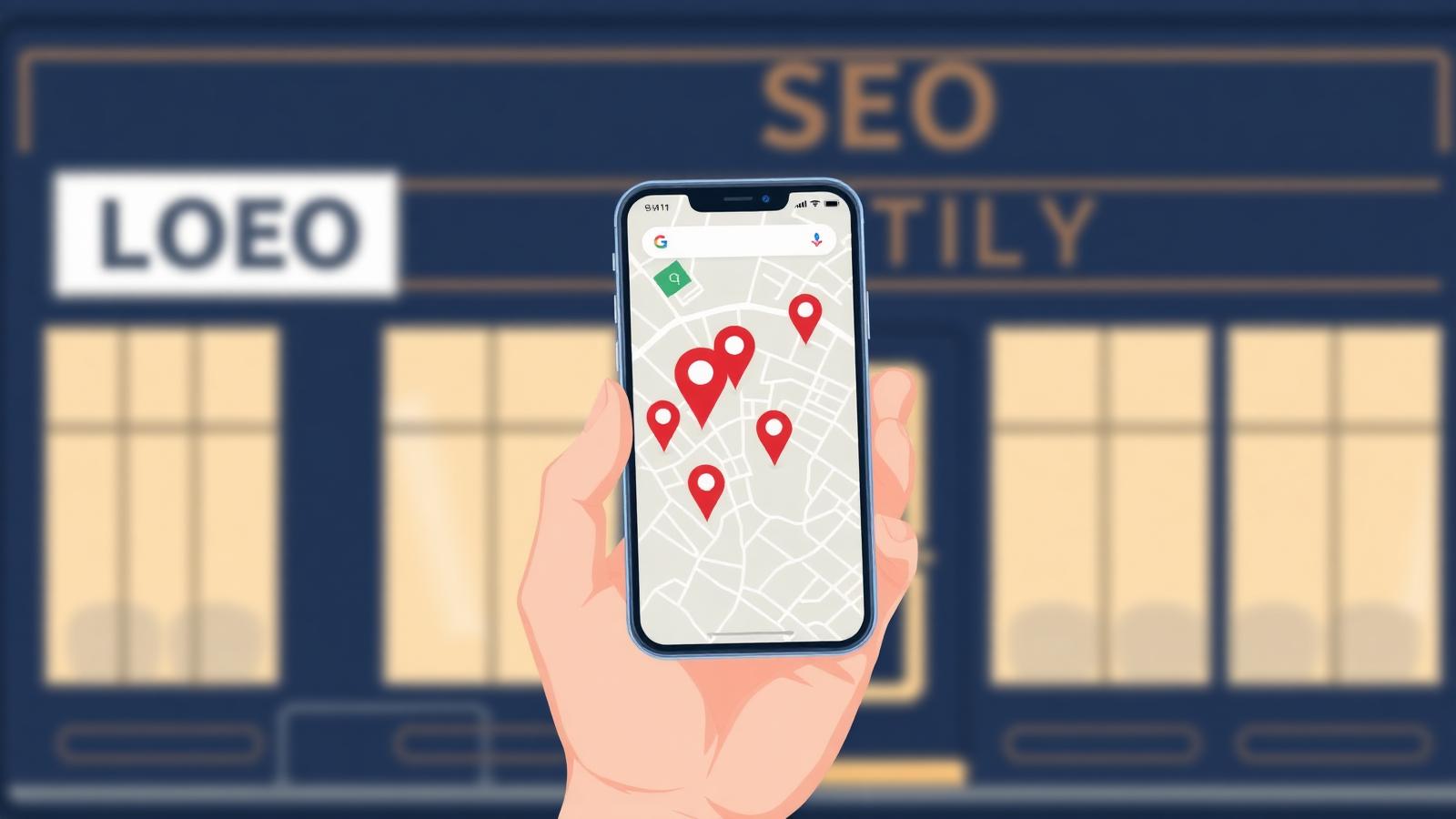
Local SEO is the practice of optimizing your online presence so your business shows up in search results for people looking nearby — specifically in Google's "local pack" (the map and the 3 business listings that appear above regular search results), in Google Maps, and in localized organic search results.
It's different from general SEO in one key way: intent. Someone searching "content marketing tips" wants information. Someone searching "content marketing agency near me" wants to hire someone, probably soon. Local SEO exists to capture that second kind of search — the kind where someone is close to making a decision, not just researching one.
Local SEO touches several things at once: your Google Business Profile, your website's on-page content, the consistency of your business information across the web, your reviews, and even how fast your website loads on a phone. None of these work well in isolation. They work together, and that's exactly why so many small businesses get partial results — they fix one piece and wonder why nothing changed.
Why Local SEO Matters More Than Ever in 2026
It's easy to treat local SEO as a "nice to have" — something to get to eventually. The data tells a different story.
Nearly half of all Google searches now carry local intent, meaning the person searching wants a result tied to a specific place, not a general answer. "Near me" searches specifically have grown dramatically over the past two years, driven almost entirely by mobile and voice search, where people expect an immediate, location-aware answer the moment they ask.
What happens after that search matters even more. The majority of people who search for something nearby on their phone visit that business within a single day of searching — not a week later, not after comparison shopping for a month. A meaningful share make a purchase within 24 hours of that search. Local search isn't just about visibility; it's one of the fastest-converting channels in digital marketing, because the person searching has already decided they want something — they're just deciding who to get it from.
And yet, most businesses are leaving this opportunity untouched. A majority of local businesses still don't actively optimize for local search, and only a small fraction have anything resembling an actual local SEO plan. That gap is your opportunity. Every business that skips this work is one less competitor standing between your business and that next local search.
There's also a trust dimension worth taking seriously. The overwhelming majority of consumers now check a business's online presence — reviews, photos, website, Google listing — before ever visiting or making a purchase decision. Your Google presence isn't just a directory listing anymore. For most customers, it's the first real impression of your business, formed before they've ever walked through your door or called your number.
The Core Pillars of Local SEO
Local SEO isn't one task — it's a handful of interconnected pieces that reinforce each other. Here's what actually moves the needle.
1. Your Google Business Profile Is the Foundation
If you do only one thing from this entire guide, make it this: fully complete and actively maintain your Google Business Profile. This free listing is what shows up in the local pack, in Google Maps, and often as the first thing a potential customer sees about your business.
A complete profile includes your exact business name, address, and phone number, accurate business hours, your correct category (and relevant secondary categories), a clear business description, and a steady stream of recent photos. Businesses that treat this as a "set it and forget it" listing tend to fall behind the ones that treat it as a living part of their marketing — posting updates, responding to questions, and keeping information current.
One detail that surprises a lot of business owners: Google rewards activity. A profile with fresh photos, recent posts, and prompt review responses signals to Google that a business is active and trustworthy — and that shows up in rankings.
2. On-Page Local SEO: Speak Your Customer's Language
Your website needs to clearly and repeatedly connect your services to your location — not buried in fine print, but woven naturally into your actual page content. A homepage that says "premium consulting services" tells Google nothing about who you serve or where. A homepage that says "consulting services for small businesses in [city]" gives Google exactly what it needs to match you to the right local searches.
This extends to page titles, headings, and even image file names and alt text. It sounds like a small technical detail, but on-page local signals are often the difference between a business that ranks for its city and one that doesn't rank at all, regardless of how good the actual service is.
If your website hasn't been built with local search in mind, this is usually the fastest fix with the clearest payoff — explore our digital marketing services to see how we approach this.
3. Local Citations & NAP Consistency
A "citation" is any online mention of your business name, address, and phone number (often shortened to NAP) — on directories, industry listings, social platforms, and review sites. Google cross-references these mentions to verify that your business is legitimate and located where you say it is.
The catch is consistency. If your address is listed one way on Google, slightly differently on Facebook, and differently again on an old directory listing, that inconsistency quietly undermines trust signals Google relies on. Auditing and cleaning up citations is unglamorous work, but it's foundational — it's very hard to rank well locally on top of a shaky, inconsistent foundation.
4. Reviews Are a Ranking Factor, Not Just Social Proof
Reviews do double duty in local SEO. They influence whether a human decides to trust your business, and they directly influence how Google ranks you. Businesses that consistently earn new reviews tend to see measurable lifts in profile engagement and conversions, and businesses that rank in the top few local results tend to have significantly more reviews than those buried further down.
Two things matter here beyond just collecting reviews: recency and response. A business with 40 reviews all from two years ago sends a weaker signal than a business with 15 reviews spread evenly over the last few months. And replying to reviews — especially critical ones, handled thoughtfully — signals an actively managed, trustworthy business to both Google and future customers reading them.
5. Local Link Building
Backlinks — other websites linking to yours — remain one of the strongest ranking signals in all of SEO, and local SEO is no exception. For local businesses, the most valuable links often come from local sources: chambers of commerce, local news coverage, community sponsorships, local business associations, and partnerships with complementary nearby businesses.
These links do more than pass authority — they reinforce, in a way Google can verify, that your business is a genuine, active part of the community you claim to serve.
6. Mobile Speed & Experience
A majority of local searches now happen on mobile devices, often while someone is out and already close to making a decision. If your website is slow to load or difficult to navigate on a phone, you can lose that visitor before they ever see your offer — even if you've done everything else right. Page speed and mobile usability aren't separate from local SEO; for most searches today, they are local SEO, because that's the device and context nearly every local search happens in.
Common Local SEO Mistakes Small Businesses Make
A few patterns show up again and again in local SEO audits:
- Treating the Google Business Profile as a one-time setup instead of an ongoing part of marketing.
- Inconsistent business information across the website, Google, and other directories.
- Ignoring reviews — both not asking for them, and not responding to the ones that come in.
- Generic website content that never actually mentions the specific city or service area being targeted.
- No mobile optimization, even though most local searches happen on a phone.
- Chasing rankings without tracking what actually converts — more visibility means nothing if it doesn't lead to calls, messages, or visits.
Most of these aren't expensive to fix. They're just easy to overlook without someone actively managing them — which is exactly why so many businesses with genuinely great products or services still struggle to get found locally.
How to Measure Whether Your Local SEO Is Actually Working
Rankings alone are a vanity metric if they don't translate into real business activity. The metrics that actually matter:
- Calls and direction requests from your Google Business Profile — found directly in your free Google Business Profile insights.
- Website visits originating from local/map searches, trackable through Google Search Console and analytics.
- Review volume and rating trend over time, not just a single snapshot.
- Keyword rankings for city + service terms, tracked consistently over weeks and months, not day to day.
- Actual enquiries and bookings tied back to organic or local search traffic.
If you're only checking your ranking for one keyword once a month, you're missing most of the picture. Local SEO is a compounding effort — small, consistent improvements across profile activity, content, citations, and reviews tend to outperform occasional bursts of effort.
Local SEO Trends to Watch in 2026
Local search is evolving quickly, and a few shifts are worth planning around:
AI-powered search results. Google and other platforms increasingly summarize and recommend local businesses directly within AI-generated answers, not just traditional blue links. Businesses with complete, accurate, well-structured information are far more likely to be surfaced correctly by these systems — another reason profile accuracy and consistency matter more than ever.
Voice search continues to grow. When people speak a search instead of typing it, they're far more likely to be looking for something nearby, phrased conversationally ("where can I get X near me") rather than as a typed keyword. Structuring content around natural, question-based phrasing helps capture this growing segment.
"Near me" is becoming implicit, not explicit. Google is increasingly inferring local intent even when someone doesn't type "near me" at all — meaning local optimization matters even for searches that don't obviously look local on the surface.
The businesses that adapt early to these shifts — rather than reacting once they've already lost visibility — tend to hold their position even as the underlying technology changes.
Local SEO isn't a trend — it's simply where customer behavior already is. The businesses winning locally in 2026 aren't necessarily better than their competitors. They're just easier to find at the exact moment someone nearby is ready to buy.
Final Thoughts
The good news is that none of this requires a massive budget or a complicated strategy. It requires a complete, active Google Business Profile, a website that clearly speaks to your city and service, consistent information across the web, real reviews handled well, and enough patience to let the compounding effect of consistent work actually show up in rankings.
If you'd rather have this handled for you — from Google Business Profile optimization to full local SEO campaigns — get in touch with our team for a free consultation, or explore our full range of digital marketing services built specifically for small and growing businesses.
Sources referenced: Google Search Central, Google Business Profile, and aggregated 2026 local search behavior data from BrightLocal, Semrush, and Google/Think with Google.
Get Digital Marketing Now
Digital Marketing Team
Helping small and medium businesses grow online with SEO, paid media and conversion-focused websites.
Frequently Asked Questions
How long does local SEO take to show results?
Most businesses start seeing meaningful movement within 8–12 weeks of consistent effort, though quick wins like Google Business Profile completeness and fresh reviews can show smaller improvements sooner. Local SEO compounds — the longer it's maintained consistently, the stronger the results tend to become.
Do I need a website to rank locally, or is a Google Business Profile enough?
A Google Business Profile can get you into the local pack on its own, but a well-optimized website significantly strengthens your ranking potential and gives customers a place to actually convert once they find you. The two work best together, not as substitutes for each other.
How many reviews do I actually need?
There's no fixed number, but both volume and recency matter. A steady stream of new reviews over time outperforms a large batch collected once and never revisited.
Is local SEO different for service-area businesses without a storefront?
Yes — service-area businesses (like plumbers or consultants who travel to customers) manage their Google Business Profile slightly differently, hiding their exact address while still defining a clear service area. The core principles of consistency, reviews, and localized content still apply.
Can I do local SEO myself, or do I need an agency?
Small businesses with time and consistency can absolutely make real progress doing this themselves. Where most owners run into limits is consistency over time — local SEO rewards ongoing, month-over-month effort, which is often where a dedicated team makes the difference between a good first month and lasting results.
Explore our services
Related Articles
View all

Need Help Growing Your Business Online?
Book a FREE Digital Marketing Consultation and discover how SEO, websites and digital marketing can help your business generate more leads and sales.
Prefer to write? Visit our Contact page